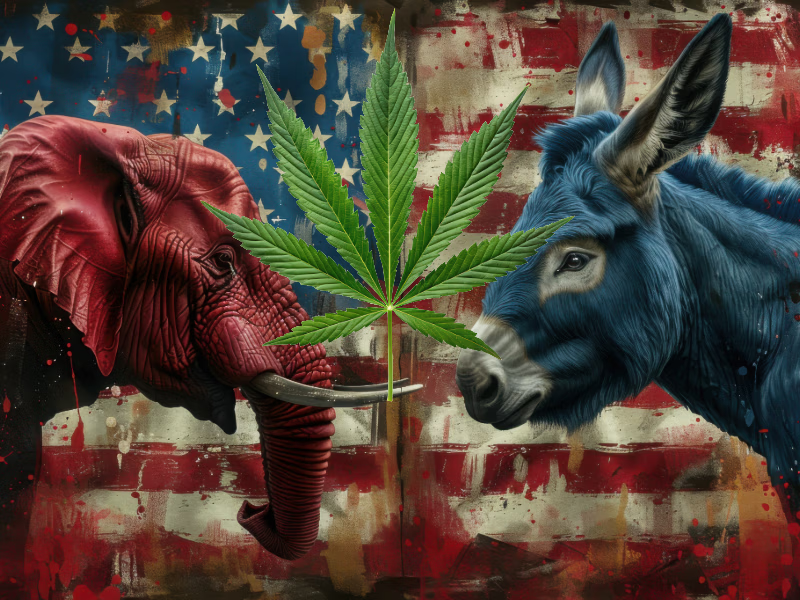
The Issue: The Recriminalization of Hemp
How Rouge Members of Congress Bypassed Debate and Open Hearings to Recriminalize Hemp in a MUST PASS Bill to Reopen the Government
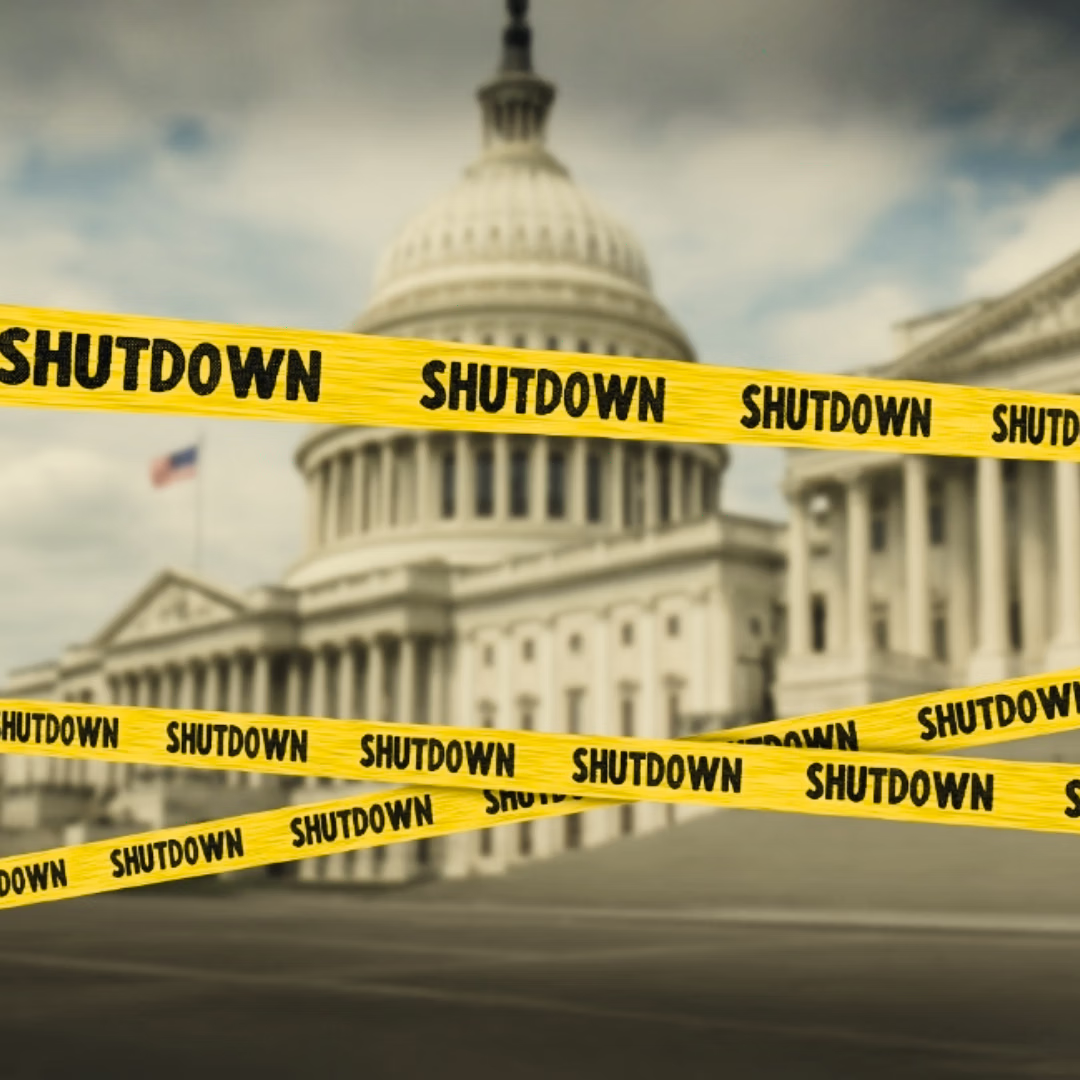
On November 12, 2025, a quiet addition to H.R. 5371, known as Section 781, was signed into law during the rush to end the longest government shutdown in U.S. history. Inserted without debate or public hearings, this provision effectively dismantles the $28 billion hemp industry, a sector the size of the NFL and NHL combined that supports more American jobs than the entire city of Miami, Florida. Unless amended, this “hidden” law will trigger a massive economic collapse, wiping out 95% of the market and billions in state tax revenue by late 2026.
- 00Days
- 00Hours
Congress’s Hidden “Kill Switch” for the Hemp Industry
Under the threat of continuing a historic, record-breaking government shutdown, a small group of lawmakers used a “must-pass” spending bill to target a multi-billion dollar American industry. On November 12, 2025, Section 781 was quietly slipped into the Continuing Appropriations and Extensions Act of 2026 – the law that reopened the federal government.
This major policy shift occurred behind closed doors, bypassing the public hearings, expert testimony, and transparent debate normally required for legislation of this magnitude. By rewriting the federal definition of hemp, Section 781 effectively dismantles an industry that is:
-
- Larger than the NFL and NHL combined in annual economic impact.
- Responsible for supporting as many American jobs as the entire city of Miami, Florida.
- A critical source of billions in tax revenue for states across the country.
- Supporting as many customers as number of people who voted in the last federal election – 156 million people.
What Section 781 of HR 5371 Does
This law fundamentally redefines the legal status of hemp and introduces new provisions that will re-criminalize most hemp-derived THC products at the federal level beginning in late 2026. Section 781 makes three major changes that effectively overturn the 2018 Farm Bill and reinstate federal prohibitions on a wide range of hemp products nationwide.
First, it changes how THC content is measured, setting a per-container limit of 0.4 mg THC, a threshold so low that nearly all current hemp products would fail to comply. Second, it prohibits all synthesized or chemically converted cannabinoids, including HHC, Delta-8, Delta-10, and THCP. Finally, it expands the definition of THC to include any cannabinoid the government deems to have similar effects, encompassing compounds like THCA and THC isomers.

Limit to 0.4mg THC Per Container
This rule establishes a threshold that virtually no mainstream hemp product can meet, including many full-spectrum CBD products.

Ban on Synthesized Cannabinoids
This rule bans any cannabinoids that are synthesized or converted using common chemical processes like how margarine, Vitamin C, and Melatonin are produced for commercial purposes.

The Total THC Standard, Catch-All Clause
Any cannabinoid the government determines has "similar effects" to THC are included in the total THC calculation - which includes THCa and other THC isomers.
The Economic Devastation of The National Hemp Ban
Independent economic analyses from Whitney Economics and other researchers estimate that the hemp-derived cannabinoid market already rivals or exceeds the size of the legal cannabis and craft beer industries. This law threatens to wipe out roughly 95% of that market overnight, displacing hundreds of thousands of workers and pushing small businesses and family farms toward bankruptcy.
$28-32 Billion
The estimated total annual market demand of the American hemp industry
328,000 Jobs
Across farming, manufacturing, retail, and distribution
$79 Billion
Total economic impact when accounting for supply chains and related industries
Who The Bill Harms
This bill threatens more than 328,000 American jobs and thousands of small businesses across farming, manufacturing, retail, and distribution, wiping out an estimated $79 billion in total economic impact nationwide. It directly harms over 50 million consumers, especially veterans and medical patients who rely on safe, legal hemp products, and will push many toward unregulated or illegal markets instead. By draining tax revenues in every state while empowering underground drug networks at the expense of licensed American businesses, this law sacrifices farmers, workers, and families without their voice, their consent, or a single public hearing.
American Farmers
American Small Business Owners
American Workers
American Veterans
American Medical Patients
American Consumers
This is NOT a Partisan Issue
Hemp legalization through the 2018 Farm Bill enjoyed strong bipartisan support, especially in agricultural states. Both Republicans and Democrats recognized hemp’s economic potential and the rights of farmers. Today, opposition to H.R. 5371’s hemp provisions crosses party lines:
- Conservative voices in red states support hemp because it creates rural jobs and protects farmers’ property rights
- Progressive voices in blue states support regulation over prohibition to ensure consumer safety and market access
- Voters across the political spectrum prefer age-gating and sensible regulation over an outright ban that enriches the illicit market
How This Happened
In November 2025, the United States entered the longest federal government shutdown in the nation’s history, lasting 43 days and halting paychecks for millions of public workers. Food assistance programs were disrupted, federal aviation and transportation operations were strained, and military and civilian employees alike faced growing financial hardship, putting intense pressure on Congress to reopen the government.
H.R. 5371 – the sprawling government funding package that ultimately passed, was widely seen as the only realistic vehicle to restore operations and pay federal workers, meaning there was little appetite for delay, extended floor debate, or major amendments. Buried deep inside this must‑pass bill was Section 781, language that dramatically narrows the federal definition of hemp and sets in motion a de facto recriminalization of most hemp‑derived THC products after more than seven years under the 2018 Farm Bill framework.
If Congress can quietly erase a legal, regulated $28-30 billion hemp market in a shutdown bill, it sets a precedent that any disfavored industry could be dismantled the same way-without hearings, transparency, or accountability. Especially when that industry has supported over 162 million people, which is more people than the number of people who voted in the last federal election.
By placing Section 781 inside an urgent shutdown-ending package, Congress effectively sidestepped the normal democratic process: there were no dedicated public hearings on the provision, no opportunity for broad input from farmers, small businesses, workers, or consumers, and no standalone vote that would have made support or opposition transparent. The hemp crackdown was advanced in a way that minimized scrutiny and public discussion, using a crisis over government funding to carry a sweeping policy change that many stakeholders only discovered after the fact
Against the Will of the People
With more than 50 million Americans regularly choosing to spend their own money on legal hemp products, this is not a fringe market but a national constituency. In 2020, roughly 160 million people voted, and today about 70% of Americans support legal cannabis, yet Section 781 was quietly tucked into a must‑pass spending bill with no real public debate. That is paternalistic lawmaking: the preferences of a few overriding the clearly expressed will of the many, doing a disservice to democratic values and setting a dangerous precedent for how deeply unpopular policies can be imposed without public consent.
What You Can Do
Contact your U.S. Representative and Senators today and tell them you oppose the hemp provisions in H.R. 5371. Urge them to amend or repeal this destructive language before it wipes out farms, small businesses, and access to safe, legal hemp products.
Whether you are a farmer, business owner, worker, veteran, patient, or concerned citizen, your voice is your power, and lawmakers pay attention when enough constituents speak up. Use the tools below to send a message, click to call, or tweet your elected officials now.